
Overview: What does a $40 trillion national debt actually mean for your wallet? In short, it is making your daily life significantly more expensive. As the government borrows more, it drives up interest rates on mortgages, credit cards, and auto loans, costing a typical household carrying debt an extra $4,500 per year. Over time, it is projected to slow your wage growth, raise the risk of federal tax hikes, and threaten future public benefits like Social Security. While $40 trillion might sound like just another big number, it function as a silent tax that shrinks your take-home pay and raises the cost of nearly everything you buy.
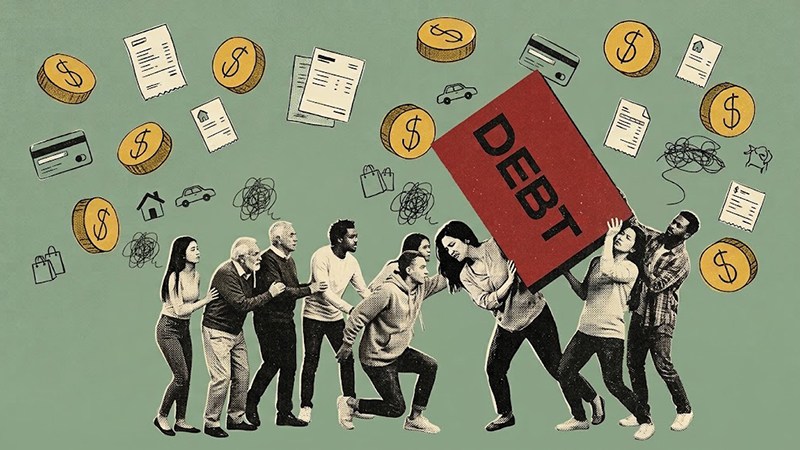
Why America’s skyrocketing national debt isn’t just Washington’s problem anymore, and how it is quietly draining your household budget.
How the $40 Trillion U.S. National Debt Impacts Your Personal Finances
The U.S. national debt has crossed $40 trillion, and the government now spends over $1 trillion every single year just to pay interest on what it owes. That is not an abstract problem happening behind closed doors in Washington. It acts like a silent tax on your daily life, raising your monthly bills, shrinking your future paychecks, and making it harder to build real wealth.
When Uncle Sam borrows money at this scale, the entire financial ecosystem shifts. Here is the exact breakdown of how America’s debt crisis reaches straight into your wallet, your business, and your retirement plan.
1. Higher Interest Rates on Mortgages, Credit Cards, and Auto Loans
To fund a $40 trillion debt, the Treasury has to issue massive amounts of government bonds. To convince global investors to buy all that debt, those bonds have to offer higher yields.
Those bond yields serve as the baseline for almost every loan in America. When Treasury yields climb, banks raise the rates they charge you. That means higher APRs on your credit cards, steeper monthly payments on your next auto loan, and mortgage rates that stay stubbornly expensive. You end up paying more for the exact same house or car simply because the federal government is competing with you for borrowed cash.
2. An Extra $4,500 Added to Annual Household Costs
Those higher borrowing rates add up fast when you look at a typical family’s balance sheet. According to an analysis by the Center for American Progress, elevated interest rates tied to the national debt tack roughly $4,500 per year onto the expenses of a household carrying a mortgage, a car note, and student loans.
Think about what $4,500 could do in your own life. That is a family vacation, a solid emergency fund cushion, or seed money for a side hustle. Instead, it gets absorbed by interest charges before you ever get a chance to invest it.
3. Slower Wage Growth Over the Long Haul
Businesses grow by borrowing money to build new factories, upgrade software, and hire talented people. When the government absorbs trillions of dollars from the lending pool, there is less capital left over for private companies. Economists call this “crowding out.”
When companies face higher borrowing costs and invest less in expansion, productivity slows down. Over time, that economic drag reduces how much businesses can afford to pay their teams. Compared to an economy with stabilized debt, high government borrowing is projected to slow average annual wage growth by thousands of dollars per worker. You work just as hard, but your raises get smaller.
4. The Growing Risk of Higher Federal Taxes
Math eventually catches up with every budget. With annual interest payments exceeding $1 trillion and eating up a massive share of federal revenue, Washington faces tough choices to close the gap.
One of the most direct levers lawmakers can pull is raising federal income taxes, payroll taxes, or capital gains taxes. Even if tax hikes initially target higher brackets or corporations, history shows that broad fiscal shortfalls often lead to policies that trim take-home pay and shrink disposable income for everyday earners.
5. Potential Cuts to Social Security, Medicare, and Public Programs
If politicians refuse to raise taxes to cover the debt, the only other option on the table is cutting spending. Because interest payments on the national debt are legally required, discretionary spending and major entitlement programs end up on the chopping block.
That puts future funding for infrastructure, local community grants, and domestic programs at risk. More importantly, it creates severe pressure on Social Security and Medicare. Without structural reforms, growing deficits accelerate the timeline for benefit reductions or higher eligibility ages, forcing you to rely much more heavily on your own savings later in life.
6. Higher Costs for Small Business Owners and Consumers
If you own a business or plan to launch one, high national debt makes growth significantly more expensive. Commercial loans track the same interest rate benchmarks as consumer debt. Current estimates show that debt-driven rate hikes add around $327 per month, or more than $39,000 over a 10-year term, to a standard small business loan.
Business owners rarely absorb those extra expenses out of sheer generosity. To protect their profit margins, local shops, service providers, and suppliers pass those financing costs along to you. You see the result every time you buy groceries, hire a contractor, or pay for everyday services.
7. A Squeeze on Retirement Accounts and Savings
High debt and heavy government spending often fuel persistent inflation, which eats away at the purchasing power of cash sitting in a standard bank account. Even when savings rates look decent on paper, inflation and taxes frequently leave your real return near zero.
Meanwhile, your 401(k) or brokerage account faces headwinds from both sides. Bond prices fluctuate wildly when debt markets get nervous, and publicly traded companies see their profit margins squeezed by higher corporate debt payments. Building a bulletproof retirement requires smarter asset allocation and active wealth management rather than relying on the easy market tailwinds of past decades.
Frequently Asked Questions About the U.S. National Debt
How does the $40 trillion national debt affect everyday people?
It directly increases the cost of borrowing money. Because the government issues more bonds at higher yields to fund its debt, lenders raise interest rates on mortgages, car loans, and credit cards, costing the average indebted household thousands of dollars extra each year.
Does the national debt cause inflation?
Yes, it can contribute heavily to inflation. When the government borrows and spends trillions of dollars, it pumps extra money into the economy while driving up borrowing costs for businesses, which leads to higher prices on consumer goods and services.
Will the national debt affect Social Security and Medicare?
Growing interest payments take up an increasingly large share of the federal budget. If lawmakers choose to cut spending rather than raise taxes to manage the debt, Social Security, Medicare, and federal infrastructure programs face a higher risk of funding shortfalls and benefit adjustments.
How can I protect my money from the effects of the national debt?
Focus on paying down high-interest variable debt like credit cards, locking in fixed rates when possible, keeping your career skills sharp to outpace slow wage growth, and diversifying your investments into assets that historically outpace inflation.
=#NationalDebt #PersonalFinance #EconomicImpact