By Elizabeth L. Cline, Arkansas Times
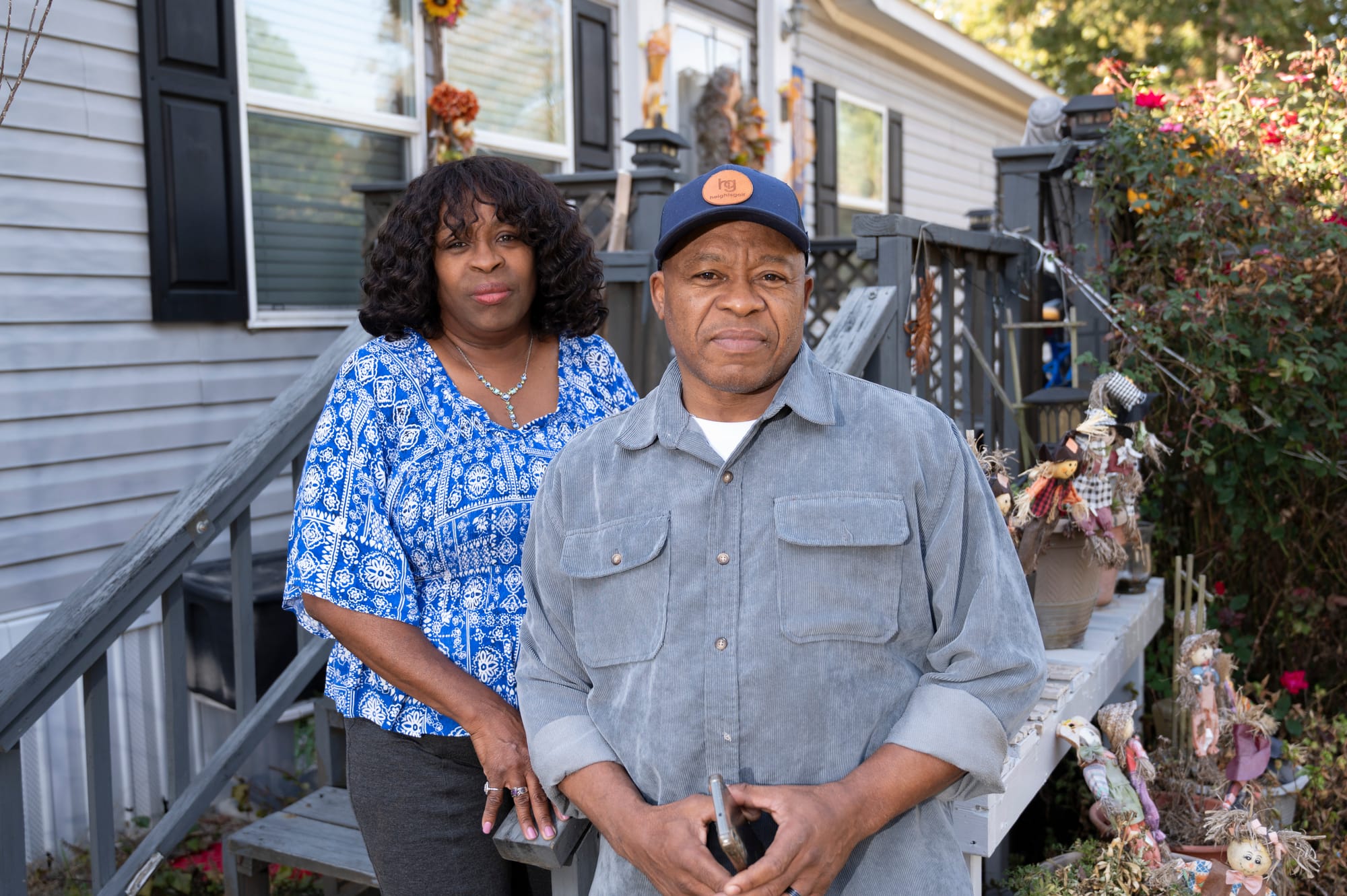
Starting early each morning, logging trucks thunder past Amber and Andrew Ngundue’s tidy country home in southeast Pulaski County, Arkansas. The procession continues until after dark, hauling away timber from the vast woods behind their home, a rural bottomland forest resplendent with streams and wildlife — and once listed among the most ecologically significant spots in central Arkansas.
Amber Ngundue moved to this community, 15 minutes south of Little Rock and just off the once-quiet 145th Street, six years ago seeking a slow pace of life. “I wanted to be in the country because it wasn’t industrial around. That’s why I moved out here,” she said. “We still want that seclusion, the quietness, the calm, the stars at night.” But it was vanishing by the day.
An operations manager who oversees meal prep for public schools, Amber Ngundue recalls leaning over the fence and asking the truck drivers what was planned. They said they didn’t know.
It wasn’t until Oct. 21, two years into planning and when this reporter knocked on the Ngundues’ door, that they found out what was coming: AVAIO Digital, a Connecticut-based tech company, was building a $6 billion data center campus feet from their home.
When completed it will span the equivalent of nearly 600 football fields, draw enough electricity to power more than half of all Arkansas’ households, use as much as 1 million gallons of fresh water per day and vanquish their way of life.
“The fact that we were not told in the beginning kind of bothers me because you’re in our backyard, literally in our backyard,” Amber Ngundue said. “It’s like our voices didn’t matter.”
Like many families around the country, the Ngundues are caught in the crosshairs of a building frenzy in service of the national artificial intelligence boom. Arkansas politicians wooed the AVAIO project to the Ngundues’ backyard, slashing taxes for data centers and pitching the intact forests and wetlands to the tech giants.
A shift in wetlands policy has accelerated a project in central Arkansas. The case shows how the balance has tilted since a landmark Supreme Court ruling.
Evidence shows that officials in Washington helped AVAIO move through a permitting process without the neighbors ever knowing.
Records obtained through the Freedom of Information Act and interviews with Army Corps of Engineers staff show that Trump administration policies aimed at accelerating artificial intelligence helped to fast-track the AVAIO project and hollow out long-trusted avenues of public review. National security has been invoked to hide project details, while Arkansas’ own congressmen privately nudged approvals along.
The data center boom is gathering force as federal wetlands protections are being gutted, and Arkansas state agencies show no appetite to step in. As the Trump administration weighs more environmental rollbacks, the AVAIO project stands to benefit again, offering a case study in how the federal government is helping to push data centers on communities that might not want them.
AVAIO officials say that approval at the county level gives them a greenlight to proceed. But the Army Corps of Engineers said it was still evaluating the property, as of late October — leaving residents with what could be a last-ditch opportunity to challenge the project’s environmental impacts and bring it under the county’s new regulations.
A project amid the trees
When AVAIO officials first approached the Little Rock District of the Army Corps of Engineers — the federal agency responsible for protecting the nation’s waterways — in early 2025, the company faced a long road to federal approval.
The land set aside for the AVAIO Digital data center is a vast expanse of loblolly pines, native oaks and river birch, threaded with streams and wetlands. It stands out on a satellite map, a brooding green swath southeast of downtown Little Rock. To the Ngundues and their neighbors, these woods brimming with wildlife like geese, deer, and rabbits offer a perfect place to hunt or take walks.
But AVAIO’s draft plan depicts a landscape transformed into an industrial megasite: The nearly 300-acre first phase of the company’s project would include nine hulking buildings — each the size of a Costco — as well as substations, access roads and stormwater basins.
The construction would narrowly sidestep two tributaries of Fish Creek, a winding, chartreuse streak on the eastern border of the property and a main artery of the local watershed. Smaller wetlands and streams would be filled in and built over, including a potentially federally protected wetland, marked “W-03.”
In a March 6, 2025, email, a Corps project manager responded unequivocally: “After discussing with my boss, a standard permit application will need to be turned in,” the staffer wrote.
A standard permit meant the Corps planned to put the company through a time-consuming, rigorous review reserved for projects with potentially significant impacts to waters of the United States. Environmental groups have long used the Corps’ onerous reviews to push back on harmful developments.
“Someone has determined that the project is big enough and going to impact the environment enough that they need to go through that standard permitting process,” said Rob Lee, an environmental lawyer based in Rogers who has litigated cases related to data centers.
Critically, a standard permit would require AVAIO to notify the public, giving the community — including the Ngundues — a chance to weigh in.
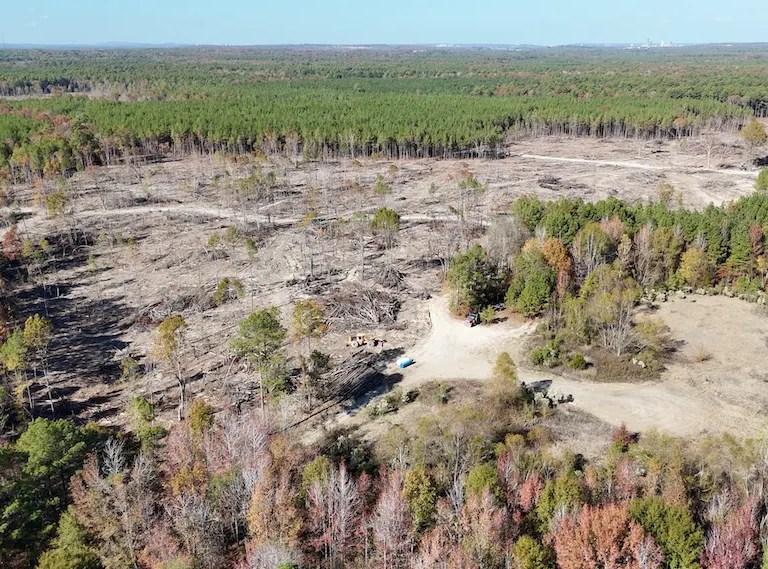
An aerial view of clearcutting underway at AVAIO Digital’s planned $6 billion data center in southeast Pulaski County. The first phase of the development will cover nearly 300 acres, with massive server buildings each the size of a Costco, access roads, substations and stormwater basins. The site was once part of an ecologically rich bottomland forest threaded with streams and wetlands. (Brandon Guillot/Unmanned Aerial Solutions of Arkansas)
But the notification never arrived. Instead, the federal permitting landscape shifted in AVAIO’s favor.
President Trump issued an executive order in July 2025 directing the Environmental Protection Agency and the head of Army Corps of Engineers to ease permitting requirements under the Clean Water Act, the nation’s bedrock water pollution law. The president wanted to lower the permitting hurdles for data center infrastructure, calling a rapid buildout a matter of national security.
So when AVAIO moved ahead with its formal wetlands permit requests in December of that year, those relaxed rules eased the process.
Mentions of a standard permit in correspondence between the company and the Corps were dropped, and W-03 was no longer marked as under federal purview.
The company pursued a “nationwide permit” instead, a speedy approval with no public notification requirement, once reserved only for projects with minimal impacts, like a housing development or restoration project, said Kyla Bennett, a former wetlands permit reviewer at the EPA and the science policy director at the Public Employees for Environmental Responsibility, a nonprofit that protects whistleblowers.
Bennett said AVAIO’s proposal bears little resemblance to the kind of low-impact project the permit was designed to cover. “The nationwide permit is supposed to be minimal impact. This is not going to be a minimal impact to this wetland system,” she said. “It’s just not.”
In January 2026, the Corps modified its rules to explicitly open up nationwide permits to data centers — another sign of the administration’s push to accelerate construction. “He’s looking for a way to just rubber stamp these approvals,” Bennett said of the president.
When AVAIO finally took the project public in January, it ignited an intense public backlash. Elected leaders on the Pulaski County Quorum Court scrambled to put in guardrails, while AVAIO raced to finish up its approvals.
In an April email to the Corps, an environmental consultant at the professional services firm Stantec, working on behalf of AVAIO, reached out noting it was eager to keep the project on time, noting a construction start slated for late May.
That same day, the Corps began invoking Trump’s data center executive order in communications. “Due to this being a data center, there have been discussions about this project internally,” a Corps staffer wrote to Stantec.
The Corps pushed AVAIO and other data center projects to the front of its queue, the agency confirmed in an interview with the Arkansas Times.
“We used to always do chronological order of when the projects came in, but now we have to make that priority,” said Emily Edwards, a regulatory division project manager. “We have 40 projects, and it goes to number one or two.”
This story is a product of the Mississippi River Basin Ag & Water Desk, an independent reporting network based at the University of Missouri. Sign up for the Desk’s newsletter here. And is in collaboration with The Narrative Matters to re-post to the site.