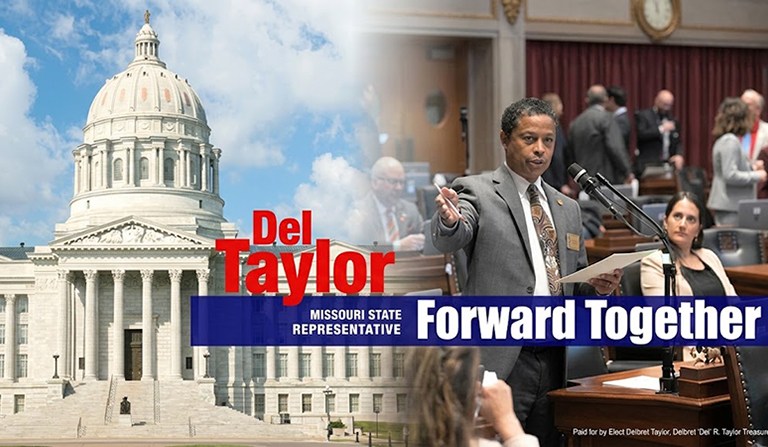
Overview: Missouri State Representative Del Taylor is rallying St. Louis residents to look beyond surface-level political ads and examine the high-stakes decisions facing District 84 and the wider region ahead of the general election. Taylor firmly opposes Amendment 3, emphasizing that rolling back constitutional reproductive healthcare rights harms everyday families and puts physicians in legal jeopardy during medical crises. At the municipal level, Taylor connects statewide policy directly to kitchen-table issues across St. Louis, calling for strict public transparency over police executive pay agreements, demanding accountability for a ten-year plan to clear vacant buildings, and pushing to ensure that court-cleared North St. Louis properties are developed to benefit longtime neighborhood residents.
From Reproductive Rights Battles To Closed-Door Police Pay Raises And Vacant Lots, Representative Del Taylor Lays Out The Real Stakes For St. Louis Families
Abortion Bans, Six-Figure Police Pay, And Broken Blocks: Del Taylor Takes On The High-Stakes Battles Defining St. Louis
The Stakes in District 84
Election season always brings big promises, but real politics happens on the street level. In St. Louis City, voters are weighing decisions that directly shape personal medical freedom, police accountability, and neighborhood revitalization.
Representative Del Taylor grew up in the West End neighborhood. He has represented Missouri House District 84 since 2023, working through state budget allocations, local tax policies, and urban economic development.
As Tuesday approaches, Taylor is pushing voters to look past political campaign ads and evaluate how upcoming state and local decisions impact their everyday lives.
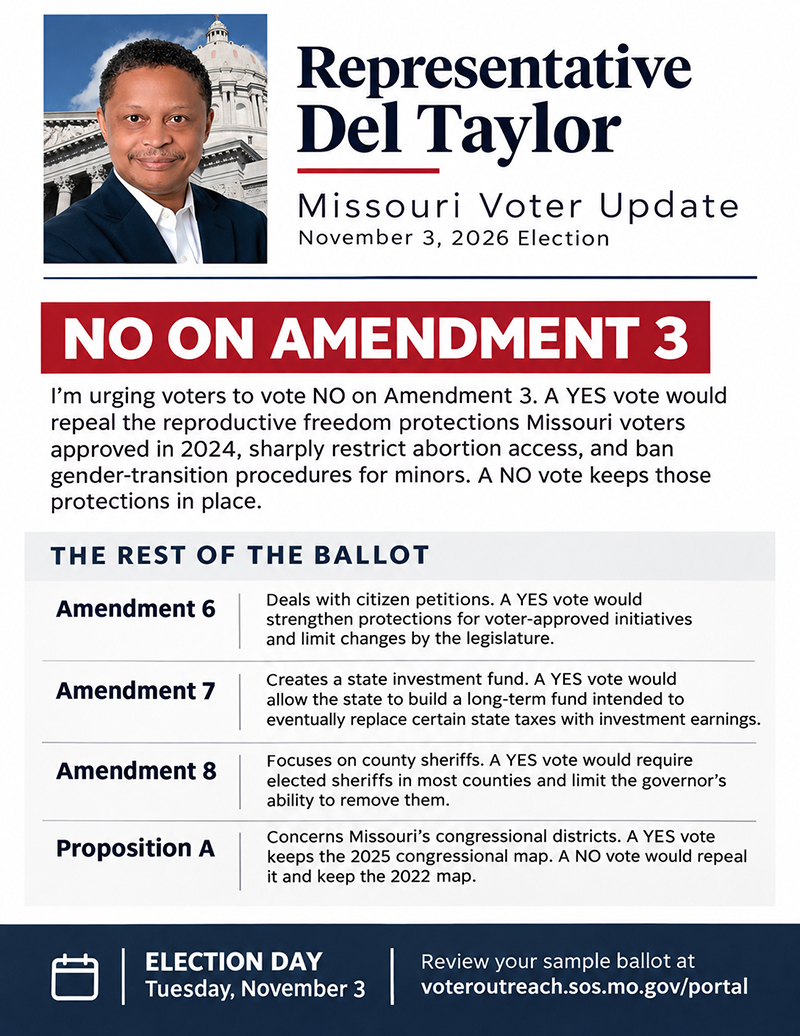
Amendment 3: What Does It Mean for Women?
The most urgent statewide question on the Missouri ballot is Amendment 3. The measure takes direct aim at reproductive freedom across the state.
Just two years ago, Missouri voters stepped up at the ballot box and approved a constitutional amendment that guaranteed personal reproductive autonomy, including legal abortion access prior to fetal viability.
Amendment 3 seeks to strip those protections away. It replaces constitutional bodily autonomy with rigid state restrictions, permitting abortion only under narrow exceptions for medical emergencies, rape, incest, and specific fetal conditions. The measure also restricts healthcare access for transgender minors.
Taylor opposes Amendment 3 outright. He points out that medical decisions belong strictly between women and their doctors, not state politicians.
For families, the issue is not an abstract legal theory. When pregnancy complications arise, vague statutory language forces emergency room physicians to consult hospital defense lawyers before providing necessary care. Taylor argues that stripping constitutional protections will turn back the clock on patient safety and drive quality medical professionals out of Missouri.
St. Louis Police Chief’s Salary: Why Are People Talking About It?
Public safety remains top of mind for St. Louis residents, but a recent compensation dispute has raised serious questions about government transparency.
The state-appointed police board recently approved an agreement raising St. Louis Metropolitan Police Chief Robert Tracy’s annual base pay to 295,000 dollars.
City leaders hit the brakes on the payout almost immediately. Serious questions surfaced over whether the board bypassed Missouri open meetings laws when negotiating the contract behind closed doors. The state attorney general was formally requested to investigate the process.
For residents in District 84, this conflict is about more than administrative procedures:
- Taxpayer oversight matters when allocating municipal funds.
- Department resources must address persistent patrol staffing shortages.
- Neighborhood response times demand priority over executive compensation packages.
- When public funds get directed into closed-door salary boosts while neighborhood patrol beats struggle with basic equipment, voters have a legitimate right to demand full accountability.
Vacant Buildings: What Is the City Doing About Them?
Generations of disinvestment have left visible scars across North St. Louis. Every resident knows the landscape: cracked foundations, boarded-up windows, and overgrown vacant lots that attract illegal dumping.
Vacant buildings are an active economic drain. They lower surrounding home equity, strain fire department resources, and deter entrepreneurs from investing on commercial corridors.
Earlier this year, the city introduced a comprehensive ten-year plan designed to systematically clear abandoned properties. The objective is simple:
- Secure and maintain derelict structures before they collapse.
- Fast-track neglected properties back into productive, taxable use.
- Coordinate district development rather than relying on piecemeal cleanups.
For working homeowners and renters, the test of this initiative will be measured block by block. A clean neighborhood builds pride and creates real commercial foot traffic for small local businesses.
North St. Louis Redevelopment: What Happens Next?
A major legal breakthrough recently cleared the path for direct neighborhood renewal. A local court ruling cleared the way for the city to acquire 89 neglected parcels tied to stalled development projects in North St. Louis.
Taking legal title is just the first hurdle. The city must complete property valuations, conduct environmental assessments, and clear remaining legal encumbrances before ground crews can break dirt.
The primary concern among community members is what gets built on that land:
- Will long-term residents be protected from displacement?
- Will development deals prioritize affordable, single-family homeownership?
- Will minority contractors and local neighborhood shops secure space on these blocks?
- Taylor emphasizes that neighborhood development must directly serve the people who held the community down through its toughest decades.
Bringing Government Decisions Closer to Home
Government decisions made in Jefferson City and at St. Louis City Hall shape your household budget, medical decisions, and neighborhood safety every single week.
The general election takes place Tuesday, November 3, 2026. Polling locations across Missouri remain open from 6 a.m. to 7 p.m. Voters can verify their registration status, find their official ward polling site, and preview their sample ballot at voteroutreach.sos.mo.gov/portal.
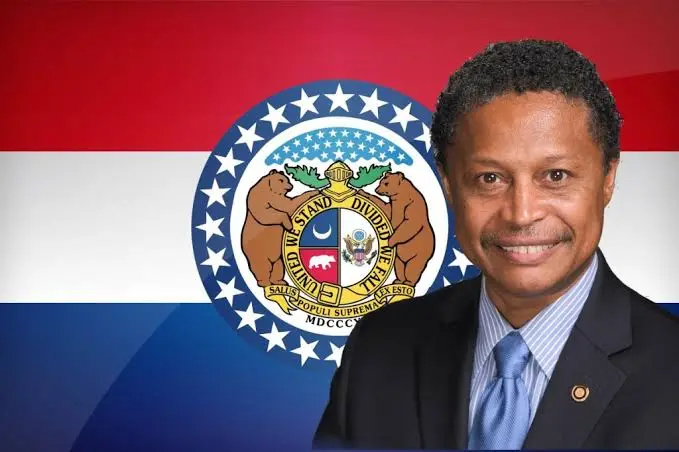
To engage effectively with State Representative Del Taylor (Missouri House District 84), focus on collaborative, actionable community priorities.
- Focus Areas: Ground your outreach in issues affecting District 84 and the wider St. Louis region, particularly neighborhood development, community events, local business support, budget priorities, and constituent resources.
- Collaboration & Events: If you are proposing community events, panel discussions, or local initiatives, frame the request with clear objectives, community benefit, and potential partner organizations to demonstrate strong grassroots alignment.
- Official Legislative Inquiries: For policy discussions, constituent casework, or legislative matters, reach out through his official Capitol office:
- Email: del.taylor@house.mo.gov
- Phone: (573) 751-2198
- Capitol Office: Room 130-DA, 201 W. Capitol Ave., Jefferson City, MO 65101
#District84 #STLPolitics #ForwardTogether