
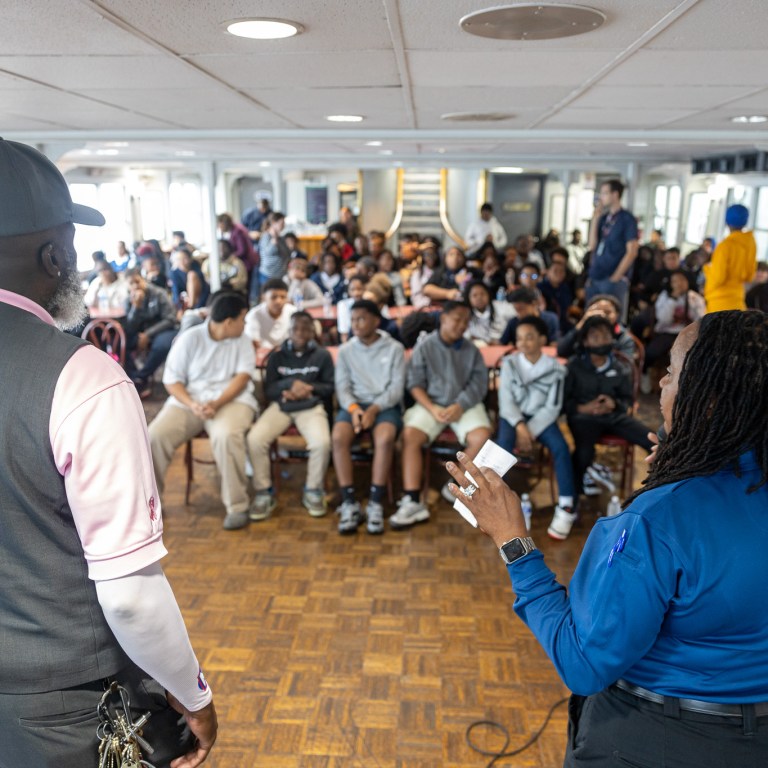
[ST. LOUIS, MO/Nov. 4, 2026] – More than 100 seventh-grade students from the Ferguson-Florissant School District traded the traditional classroom for the Mississippi River on Thursday, Oct. 15, as the St. Louis Regional Freightway hosted an immersive career exploration experience designed to introduce them to the many ways people and products move through the St. Louis region.
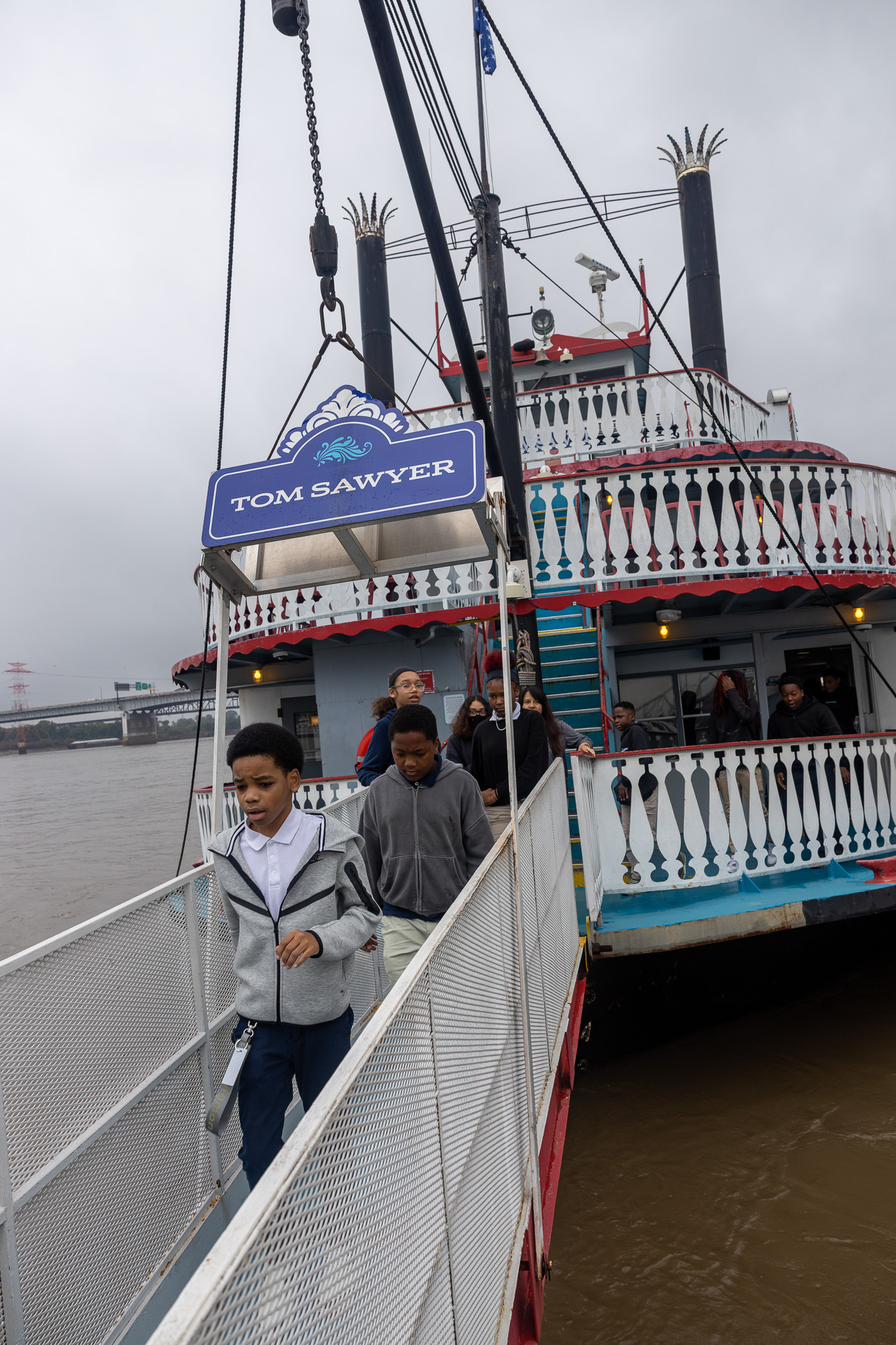
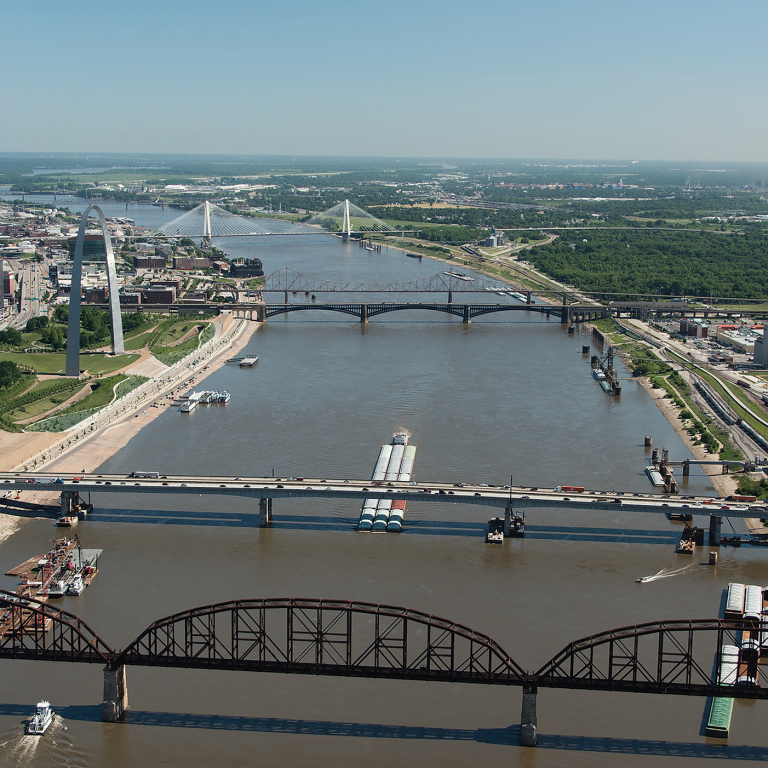
Held aboard the Tom Sawyer, part of the Gateway Arch Riverboats fleet, the career day brought students face-to-face with professionals working in trucking, river transportation, freight rail, aviation and aerospace, public transit and tourism. A highlight of the experience was a riverboat cruise that gave students a front-row view of the working Mississippi River and the transportation infrastructure that helps make the St. Louis region a global logistics hub. The timing provided at least one memorable real-world lesson when a 15-barge tow passed nearby, creating a wake the students could feel aboard the Tom Sawyer, a replica 19th century paddle wheeler.
Mary Lamie, Executive Vice President of Multimodal Enterprises for Bi-State Development, which operates the Riverboats at the Gateway Arch, welcomed students by explaining the supply chain through something familiar: the journey raw materials such as corn can make through a network of processes before ultimately becoming a product on the breakfast table. She challenged the students to use the day to see both how those connections work and how many career opportunities exist within them.
“When you guys leave this riverboat today, you’re going to have a much better understanding of the fact that this region is considered a global logistics hub and we’ve got some really great jobs that support these industries,” said Lamie.
Nelson Curran, a Mississippi River educator working with Living Lands & Waters, took students inside the world of commercial river transportation. He helped them to understand the important role barges play in moving commodities, highlighting how a 15-barge tow on the upper Mississippi River can carry the same amount of freight as over 1,000 semi-trucks. He described the demanding work of deckhands, who safely secure barges into tows with heavy wires and ropes, assist with vessel maintenance and work in all types of conditions to keep commodities moving. He also emphasized one of the day’s central messages: some transportation careers can offer young adults an immediate pathway into the workforce, with training provided on the job.
“A lot of these jobs, guys, you can go right out of high school, step right onto a barge, and get moving right away,” said Curran. “On-the-job training is one of the most important things out here on the river.”
The students heard a similar message from Eric Fields, Chief Engineer of the Terminal Railroad Association of St. Louis, who introduced them to freight rail careers and stressed the importance of safety, focus and reliability. He explained that railroads operate their own training programs and told students that employees need to be alert, committed to working safely and willing to work the hours required in an outdoor environment. For Fields, reaching students while they are still beginning to think about careers is especially important. He said he never had an experience like this at their age and noted that St. Louis offers an unusually broad transportation network.
“I think it’s a chance to familiarize the kids at a formative age with what opportunities could be out there so they can start thinking about what they might want to go into as a career field,” said Fields. “And we can educate them on some of the opportunities right here in St. Louis, which has a great transportation network.”
Josh Kalachek, a truck driver for Dynamic Transit Company with 26 years of industry experience, helped students look beyond the person behind the wheel of a truck to understand the larger team needed to keep freight moving so people can find the products they want at their local Walmart or Target. He outlined careers ranging from mechanics and driver managers to customer service representatives, load planners, sales professionals and route planners.
He also spoke candidly about the opportunities ahead as an aging trucking workforce creates demand for the next generation of workers. He told students that truck drivers can earn approximately $50,000 to $125,000 annually depending on the job and experience. “It’s a phenomenal industry with great opportunity,” said Kalachek, adding that because it’s a service industry, there’s less of a chance that some of those jobs will be replaced by AI.
Yolandea Wood, president of the Hugh J. White Tuskegee Airmen Chapter and part of the St. Louis Organization of Black Aerospace Professionals, expanded the students’ view of aviation beyond pilots. She walked them through the many people needed to get an aircraft into the sky, from those who design and build airplanes to employees who fuel, load, maintain and direct them on the ground and those who guide them while in the air.
“Unfortunately, they don’t have street signs up there; no red lights,” Wood said. “So we have air traffic controllers who monitor the airplanes on a big radar scope. That’s another job that you can have – air traffic controller. If they don’t exist, you don’t fly.”
She also challenged students to think about emerging technology and innovation in aerospace manufacturing, including the potential to develop lighter aircraft components that could reduce fuel consumption or to use 3D printers to print aircraft wings, planting the seed that any of them could come up with the next multi-billion-dollar idea.
Wood, who told students she flew in the U.S. Air Force for 20 years, also shared how an aviation career enabled her to travel around the world and encouraged students to explore aerospace jobs in offices, factories and aboard aircraft. “Ladies and gentlemen, there are a lot of jobs here in aviation,” said Wood.
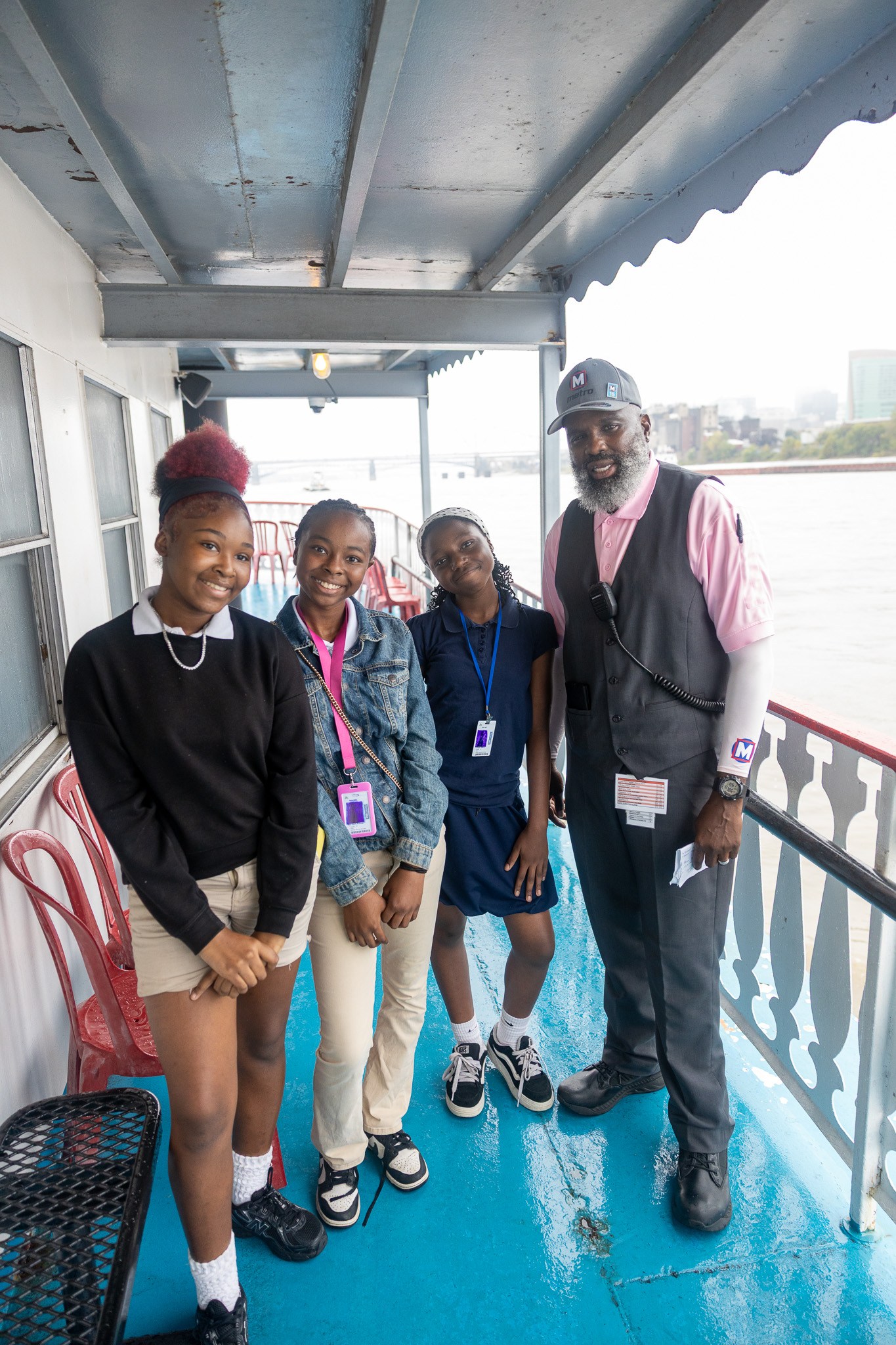
David Hawthorne, Senior Transit Service Manager for Metro, and Kim Quinn, a Metrobus Operator, turned the discussion to public transit, showing students that careers in public transportation can provide room to advance and build an entire career. Hawthorne described positions ranging from bus and MetroLink operators to rail dispatchers and management, using his own progression as an example of the upward mobility the industry offers. “I started off as a bus driver and then went onto be a train operator. Then I got into management,” said Hawthorne. “So it’s plenty of opportunities to come in and make a lot of money.”
Quinn, who told students she has spent more than 20 years with Metro, discussed the training involved in becoming an operator and the importance of safety. She said bus operators start out earning about $50,000 a year and get excellent benefits. She also described public transit as a career that enabled her to remain close to home and family, an advantage she didn’t have in her prior career on the heavy rail side of the industry.
“I didn’t want to leave my son, so I said the next best thing is to come to Metro because it’s local,” said Quinn. “I can be at home every day.”
Jennifer Poindexter, Vice President, Convention & Visitor Services for Explore St. Louis, introduced another dimension of the regional transportation economy: the connection between transportation and tourism. She explained that Explore St. Louis promotes the city to visitors and highlighted how MetroBus and MetroLink help connect visitors and residents with attractions and destinations throughout the region.
She also encouraged students to think broadly about what a tourism career can look like, emphasizing that the industry depends not only on front-line hospitality employees but also professionals in areas such as finance, human resources and other supporting functions. She shared that compensation within the industry varies but gave examples such as a catering salesperson who would start at approximately $55,000 annually, or a director of IT at a professional sporting operation, which would be over $100,000. “In hospitality and tourism, every job is necessary,” said Poindexter.
For seventh graders Andraya Chambers and Jamia Shaw, the experience made the scale and complexity of the transportation network more tangible. Chambers said she came away with a better understanding of how the different parts of a supply chain work together, describing how a product can move among ships, factories, manufacturers, trains and trucks before ultimately reaching a consumer’s home. The aviation presentation especially caught her attention. “I’d probably work on a plane, to be honest,” said Chambers. “I like being quite high in the air and I feel like if I was to work on an airplane, I would like it. I would enjoy it.”
Shaw also found herself especially drawn to aviation and said the event introduced her to careers she had never considered before. But one of the day’s most memorable moments came on the river itself, when the students were learning about barges and then saw one pass nearby. “I didn’t know they were really big and as y’all were talking about it, like it came by, which was really cool to me,” said Shaw. “And I didn’t know that it was such a very long process and a lot to do for the people who take care of them.”
The St. Louis Regional Freightway career experience was designed to give students an early look at the wide variety of careers connected to a transportation system they encounter every day but may rarely stop to consider. Presenters emphasized that the transportation sector needs people with many different talents and educational backgrounds. The message was reinforced by Lamie, who reminded students that many of the skills needed in transportation and manufacturing are already being developed in their everyday lives. Teamwork, communication, problem-solving and learning how to work effectively with others all translate directly to the workplace.
The event was part of a broader series of fall workforce development initiatives led by the Regional Business Council, Ferguson-Florissant School District and other participating school districts, which included the collaboration of regional employers, educators, and community partners. These efforts are designed to expose students across the region to high-demand careers, strengthen connections between education and industry and help build the region’s future workforce.
“This was an amazing opportunity for our seventh-grade students to step outside the classroom and see how transportation plays an important role in our everyday lives,” said Darneshia Washington, Seventh-Grade Math Teacher at Cross Keys Middle School. “From learning about careers in aviation and trucking to seeing the Mississippi River and its barges firsthand, our students were exposed to opportunities they may not have considered before. Experiences like this help students make real-world connections, explore their interests, and begin thinking about their future careers.”
Tickets for the riverboat cruise were provided by the Gateway Arch Park Foundation’s Journey Fund, which helps more schoolchildren experience all that Gateway Arch National Park has to offer, including ticketed activities and transportation assistance. To learn more about the Journey Fund, visit archpark.org/visit/journey-fund.
About St. Louis Regional Freightway
Established as the St. Louis region’s authority for coordinating support for industrial businesses and the logistics infrastructure they depend on, the St. Louis Regional Freightway (the Freightway) provides site selection and business assistance to manufacturing, logistics and multimodal transportation companies and their service providers. As an enterprise of Bi-State Development, the Freightway partners with public sector and private industry businesses to advocate for infrastructure development that supports the movement of freight, leads initiatives to grow the region’s talent pool, and plays a critical role in marketing the region as a world-class manufacturing and distribution cluster within the City of St. Louis and seven adjacent counties in Missouri and Illinois. To learn more, visit thefreightway.com.