Overview: Missouri’s legislative dynamic fundamentally changed following the November election: while Republicans keep majority control of both chambers, Democrats gained 16 House seats and two Senate seats, breaking the veto-proof Republican supermajority. For St. Louis Representative Del Taylor (D-84), who won reelection with more than 90 percent of the vote and stepped in as Treasurer of the Missouri Legislative Black Caucus, this broken supermajority eliminates unchecked party-line veto overrides and emergency clauses, giving the urban minority real bargaining leverage to safeguard critical funding for Medicaid transit, addiction recovery housing, and community healthcare.
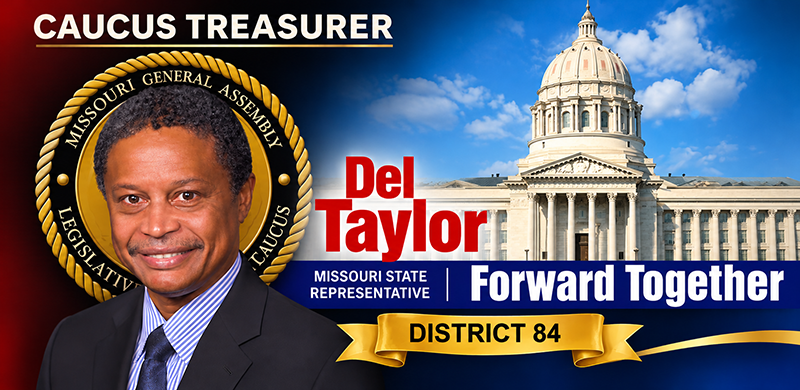
Inside Del Taylor’s Playbook: How Breaking the Veto-Proof Supermajority Gives St. Louis Real Leverage on Healthcare, Housing, and Transit
Missouri voters changed the balance of power in Jefferson City this November, but not which party controls it. For State Representative Del Taylor, the election results bring another term representing St. Louis City’s 84th District alongside a transformed political landscape for the legislative session ahead.
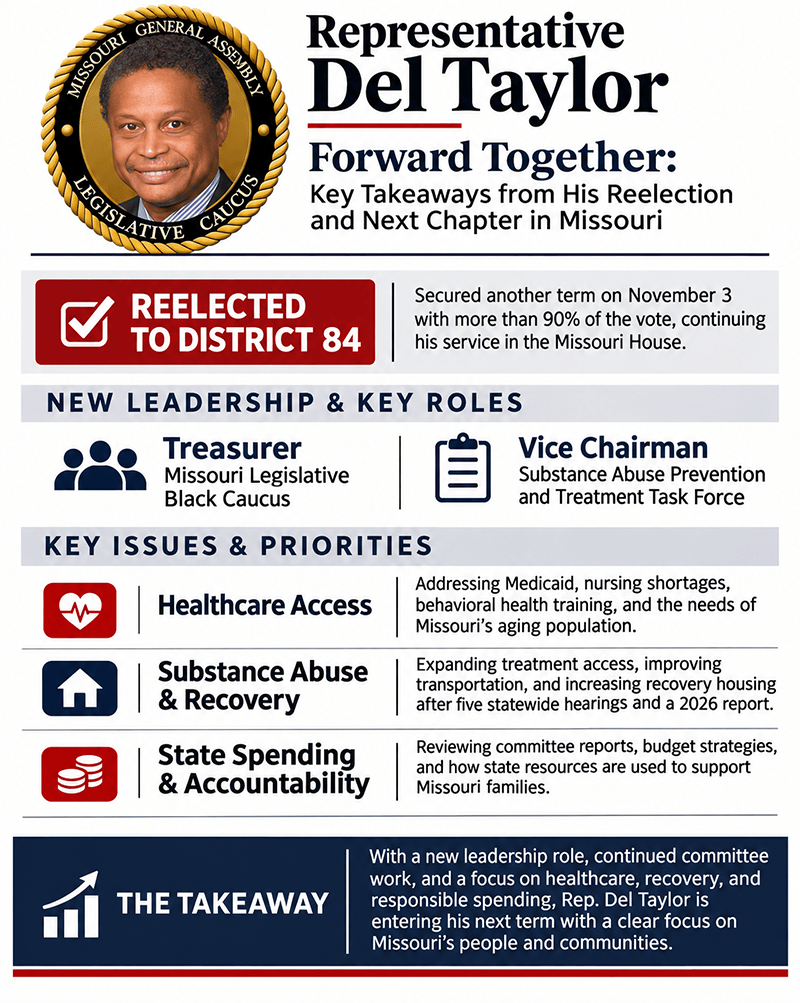
Taylor secured reelection with over 90 percent of the vote and stepped into a key leadership role as Treasurer of the Missouri Legislative Black Caucus. In a conversation with The Narrative Matters, Taylor broke down what fueled the Democratic gains, the mechanics of a divided legislature, and what these wins mean for urban neighborhoods facing persistent hurdles in healthcare access, affordable housing, and public transit.
What the Blue Wave Actually Changed in Jefferson City
Democrats flipped 16 Missouri House seats and picked up two Senate seats, successfully dismantling the long-standing Republican supermajorities in both chambers. Even with these pickups, Republicans hold the operating majorities: 95 seats to Democrats’ 68 in the House, and 22 to 12 in the Senate.
That distinction dictates daily governance:
- Standard Bills: Republicans still hold enough numbers to pass ordinary legislation strictly along party lines.
- Two-Thirds Thresholds: Actions requiring a constitutional two-thirds majority, most notably overriding a governor’s veto or passing emergency clauses, now require bipartisan cooperation.
- Committee Leverage: A tightened margin gives the minority caucus greater debate leverage and procedural authority in committee hearings.
Taylor attributes the seat flips to a mix of higher Democratic turnout, moderate voters defecting over national controversies, and mounting public frustration with federal policy. He cited pocketbook strains from import tariffs, foreign military actions involving Iran, and a perception that state lawmakers failed to push back on executive overreach.
At the same time, Taylor emphasized that opposition alone did not win races.
“The Democratic formula still works,” Taylor explained, pointing to clear campaign commitments around healthcare access, housing security, and kitchen table economic concerns. His assessment highlights that voters responded to steady messaging on basic quality of life needs.
From Campaign Wins to Policy Realities
While 90 percent victory margins signal solid local backing, the practical challenge for District 84 is translating minority legislative seats into tangible neighborhood outcomes under continued Republican control.
Taylor pointed to his ongoing service on the Missouri Substance Abuse Prevention and Treatment Task Force as a model for moving policy forward in a split chamber. After conducting five formal hearings, Taylor contributed directly to the task force’s February 2026 findings.
The report documented how systemic issues like housing insecurity and unreliable transit prevent Missourians from accessing medical treatment and completing clinical recovery programs.
Key outcomes and focus points include:
- 1 Dedicated Funding Streams: Missouri’s fiscal year 2026 state budget directed roughly $529 million across multiple departments toward substance abuse prevention and clinical care.
- 2 Transportation Fixes: Expanding non-emergency Medicaid transit services so patients can travel to clinics without missing critical appointments.
- 3 Recovery Housing: Investing in stable, supervised transitional housing options to prevent clinical relapses.
- 4 Workforce Shortages: Confronting severe statewide deficits in bedside nursing, clinical behavioral healthcare staff, and geriatric specialists.
These issues directly affect daily life in St. Louis City, where a missed bus connection or a shortage of clinical beds can derail a family’s stability.
The Work After the Win
Stepping in as caucus treasurer adds administrative and strategic duties to Taylor’s standard legislative and budgetary docket. Yet title appointments and wide voting margins do not substitute for passed bills.
The ultimate benchmark for Taylor and his legislative colleagues remains straightforward: whether policy recommendations materialize as funded public services, accessible clinical beds, and direct neighborhood investments.
Campaign coverage focuses on what sits at stake before citizens vote. The work after the election decides what reaches the street. The story never ends with an election night headline. It continues in the community.
Key Information and Regional Context
- Elected Official: State Representative Del Taylor
- Jurisdiction: Missouri House of Representatives, District 84 (St. Louis City)
- New Role: Treasurer, Missouri Legislative Black Caucus
- Key State Legislative Margin: House (95 Republican / 68 Democratic); Senate (22 Republican / 12 Democratic)
- Primary Policy Focus Areas: Missouri budget appropriations, healthcare workforce development, Medicaid transit access, recovery housing, St. Louis infrastructure

To engage effectively with State Representative Del Taylor (Missouri House District 84), focus on collaborative, actionable community priorities.
- Focus Areas: Ground your outreach in issues affecting District 84 and the wider St. Louis region, particularly neighborhood development, community events, local business support, budget priorities, and constituent resources.
- Collaboration & Events: If you are proposing community events, panel discussions, or local initiatives, frame the request with clear objectives, community benefit, and potential partner organizations to demonstrate strong grassroots alignment.
- Official Legislative Inquiries: For policy discussions, constituent casework, or legislative matters, reach out through his official Capitol office:
- Email: del.taylor@house.mo.gov
- Phone: (573) 751-2198
- Capitol Office: Room 130-DA, 201 W. Capitol Ave., Jefferson City, MO 65101
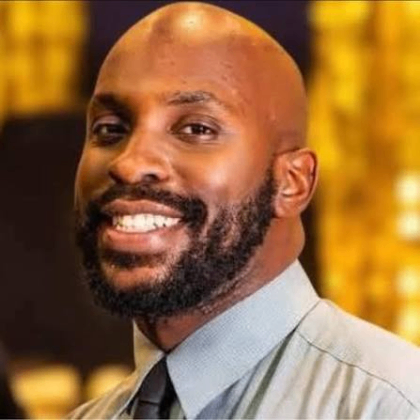
| Curtrell McCann |
| Community Strategist Ferguson Foodies Festival |
#DelTaylor #MissouriPolitics #STLPolitics