By Maria Peralta-Arellano, WXPR
April Stone sat in her studio in Ashland, Wisconsin, listening as light music streamed through the space. She recalled when the emerald ash borer first arrived in the United States, and eventually northern Wisconsin.
“I remember watching on the news that Menards had received a shipment of firewood from an area that had been quarantined from the emerald ash borer,” said Stone.
Stone is a member of the Bad River Band of Lake Superior Ojibwe and full-time artisan making black ash baskets.
Like many in the Northwoods, Stone has been saying goodbye to its ash trees. They’ve been targeted by the emerald ash borer, a beetle from Asia. Since the insect was first detected near Detroit in 2002, it’s spread to all of Wisconsin’s 72 counties and 37 other states, from the Midwest all the way down to Louisiana.
Indigenous communities work with ash trees for different uses in life. The loss is causing some to think about what the future will look like as the insect continues to work through forests.
Against a wall of Stone’s studio sits a hill made of years’ worth of ash splint, pounded out and piled high in what Stone and her students have dubbed “the nest.”
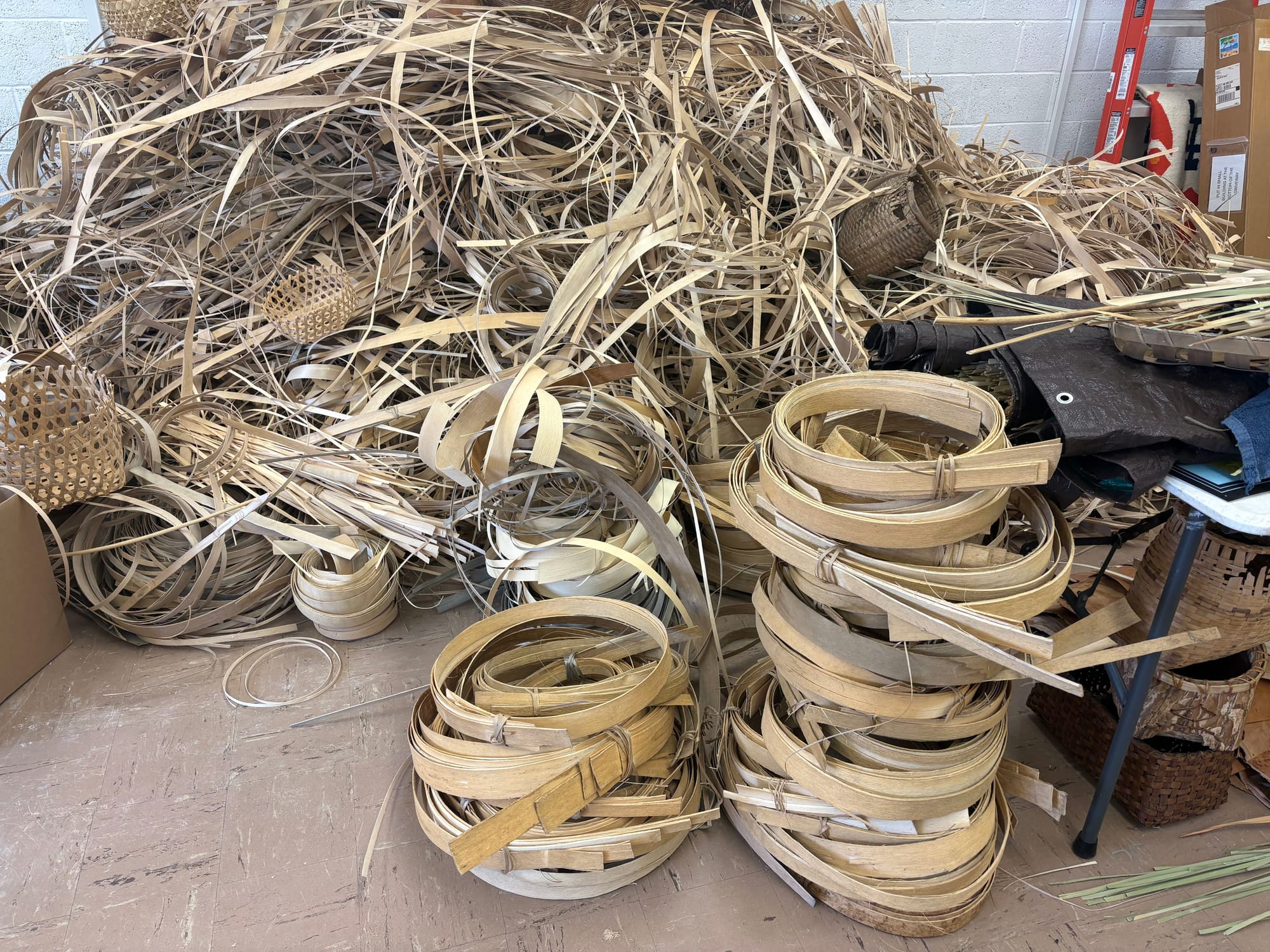
Ash baskets serve a daily purpose, but the arrival of the borer has caused Stone to consider other materials to use in her work.
“It’s also made me appreciate and honor other beings: the grapevines, the cedar, the cattail, the bulrush, the basswood, and start to establish relationships with other beings, because things change,” said Stone. “So I have to adapt too.”
Black ash trees are a keystone species. They don’t mind getting their “feet” wet, so they help regulate the groundwater table. They prevent swamping and runoff that can harm other keystone species like manoomin, or wild rice.
Colin Peters is a doctoral candidate at the University of Minnesota in the department of plant pathology. He’s been researching the insect.
“When you lose these ash trees, and suddenly there aren’t these trees which are providing structure to the soil, you might have changes in the rates of erosion in these riparian or swamp areas,” said Peters.
Miles away in the Upper Peninsula of Michigan, Richard Siewertsen located a dying stand of ash trees in the Ottawa National Forest.
“This one’s definitely dying off. That top fell right off of that one,” Siewertsen said, pointing to the trees. “Let’s see if there’s bugs in this thing. Yeah, look at — there’s a hole right there.”
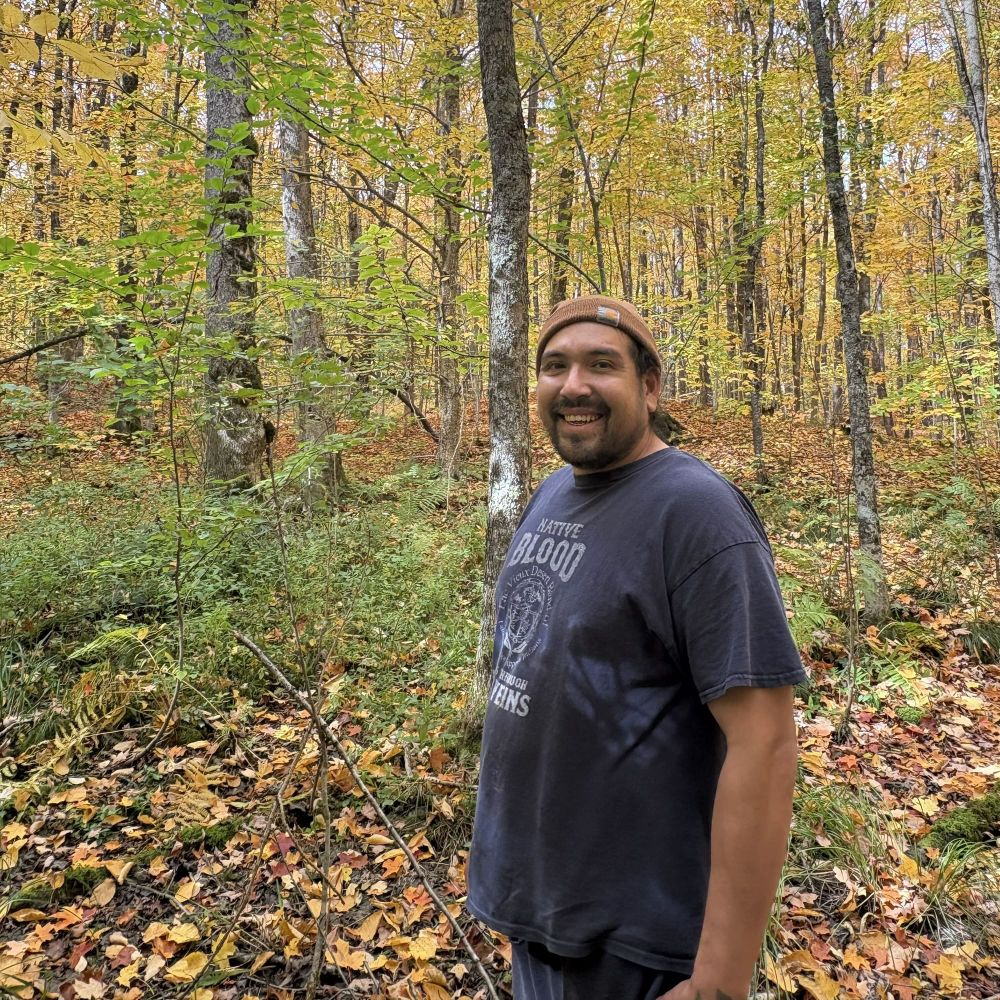
A distinct D-shaped exit hole on the trunk of the tree marked the borer’s presence.
“There were always stickers, bumper stickers. ‘Don’t move firewood; it bugs me,’ right? And that’s when I remember it,” said Siewertsen. “It isn’t until within recent years though, going out and noticing, because I wasn’t looking for it before.”
Siewertsen is the culture and language revitalization coordinator for the Lac Vieux Desert Band of Lake Superior Chippewa Indians. He crafts lacrosse sticks for his community and works with the U.S Forest Service to harvest ash trees to craft the sticks used to play. The wood is ideal for its light weight and strength.
He says the Forest Service’s current “prescription” for the pest is to leave the trees in the forest. No cutting, no selling.
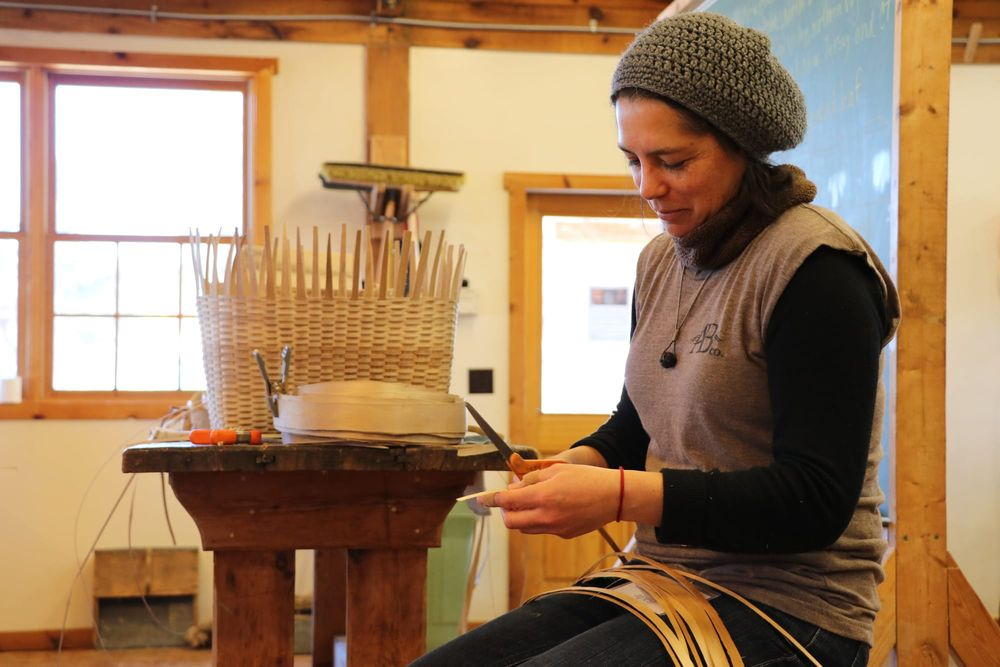
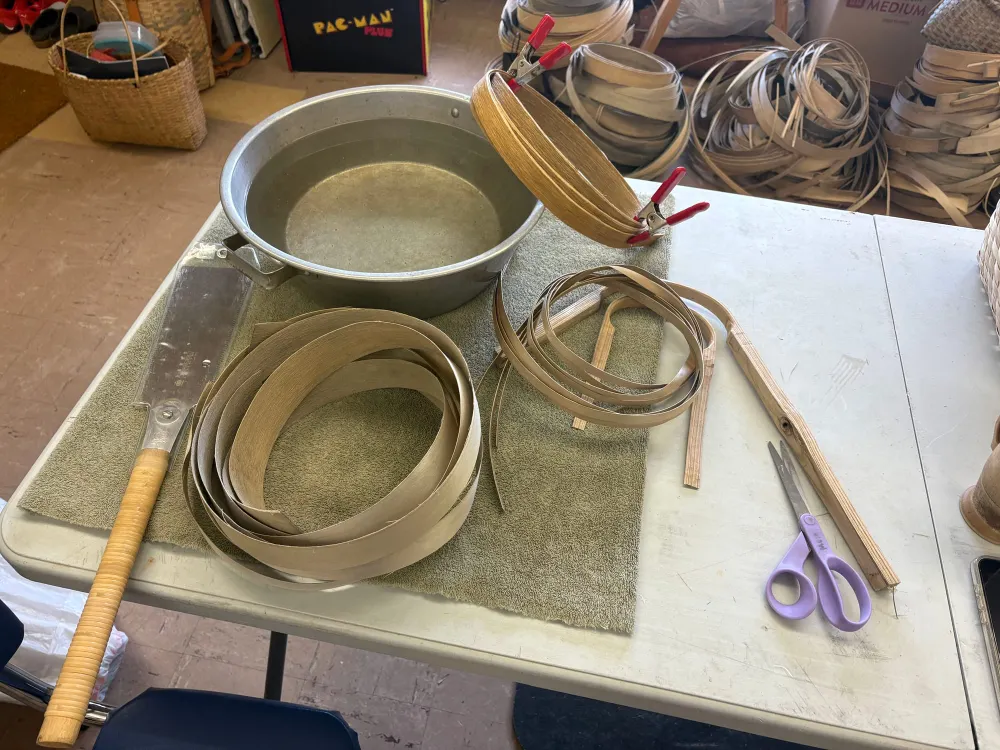
April Stone, a full-time artisan and member of the Bad River Band of Lake Superior Ojibwe, works on a new basket in her studio in Ashland, Wisconsin. (Courtesy: April Stone)
“The Ojibwe word for insect is manidoons, means ‘little spirit.’ Manidoonsag, ‘little spirits,’ and their role is as helper and messenger. So in the beginning, when I was angry, I realized, wait a second, what are these insects trying to tell us?”
This approach means taking notice of how the trees are reacting to the insect instead of jumping to control it. She also acknowledges that with the death of the trees, the baskets woven tell a new story about the being for future generations.
“Maybe we live more minimally, more in balance. Because for me, it’s all about the balance, and baskets teach balance.”
It also means making more of an effort to look into the needs of the human and how those affect our natural world.