
Overview: Between November 14 and November 18, 2026, three major developments shaped the Washington, D.C., Maryland, and Virginia region: organizers submitted over 43,600 signatures for Initiative 87 to raise D.C.’s minimum wage to $25 an hour by 2029, WMATA and DDOT unveiled Phase 1 renderings for the H Street and Benning Road Gold Line Bus Rapid Transit ahead of a 2030 launch, and local authorities responded to shootings in Southeast D.C. and Dupont Circle alongside a major water main break in Gaithersburg, Maryland.
From Initiative 87’s push for a $25 hourly wage to WMATA’s 2030 Gold Line rapid bus plans and local safety alerts, here is what is reshaping D.C., Maryland, and Virginia right now.
The Mid-Week Rundown: D.C. at a Crossroads: A $25 an hour Wage Fight, a Massive Metro Overhaul, and a Region Demand for Safety
The DMV Is Moving Fast, and Every Neighborhood Feels the Pressure
Walk down H Street NE or talk to a restaurant owner in downtown Washington right now, and you will hear the exact same thing. The ground under the D.C., Maryland, and Virginia region is shifting fast. Between November 14 and November 18, 2026, a wave of major transit announcements, high stakes labor battles, and urgent public safety updates painted a clear picture of a region trying to build its future while managing serious growing pains.
For business owners, commuters, and families across the DMV, these stories are not just headlines. They are direct signals about where money is flowing, how people will move, and what challenges local leaders have to solve next.
Metro Unveils Gold Line Plans and Stadium-Armory Upgrades Ahead of 2030
If you want to know where economic development is heading in the District, follow the transit lines. On November 17, WMATA and the District Department of Transportation released new renderings and project details for Phase 1 of the Gold Line Bus Rapid Transit route. The plan targets the busy corridors along H Street NE and Benning Road NE, alongside major upgrades to the Stadium-Armory Metro station.
The goal is clear. Officials want to move up to 22,000 daily riders faster and cut travel times by as much as 30 percent using dedicated center-running bus lanes and traffic signal priority. All of this is timed for a Summer 2030 launch to match the massive redevelopment of the RFK Stadium campus.
For local entrepreneurs and retailers along H Street and Benning Road, this is a huge growth opportunity. Dedicated transit lanes and upgraded stations mean thousands of event visitors and daily commuters funneling straight past local storefronts. Transit agencies are taking public feedback through December 18, including an in-person community open house at the Atlas Performing Arts Center on November 30. Smart business operators in Northeast D.C. should show up and weigh in while curb layouts and station designs are still on the table.
The $25 Minimum Wage Battle Heats Up in Washington, D.C.
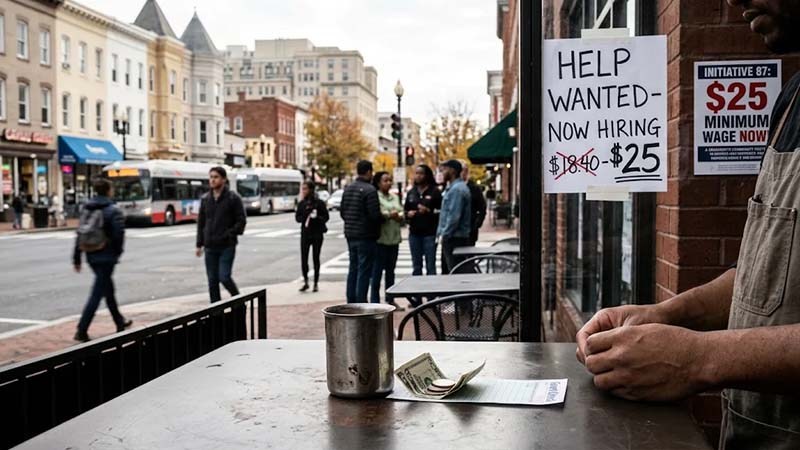
While transit planners look toward 2030, D.C. employers are staring down a much closer financial deadline. Following the November 12 submission of more than 43,600 signatures for Initiative 87, debate exploded this week over a proposal to raise the District’s minimum wage from $18.40 to $25 an hour by July 2029, while completely phasing out the tipped minimum wage by July 2031.
If the D.C. Board of Elections verifies the signatures, voters could decide the measure in a special election as soon as April 6, 2027. Supporters argue that rising living costs in the capital demand a true living wage for roughly 250,000 workers. On the other side, hospitality groups and small business coalitions warn that layering a $25 wage floor onto a city already navigating federal workforce downsizing will force painful price hikes on everything from morning coffee to childcare.
From a business strategy standpoint, D.C. companies cannot afford to wait for the spring ballot to run the numbers. Whether you run a neighborhood cafe, a retail shop, or a local service firm, modeling a higher labor floor right now is essential. Adaptation always beats reaction.
Public Safety Concerns Test Communities in Southeast D.C. and Dupont Circle
Economic growth only works when people feel safe walking the streets and going to work. That reality hit home again this week across multiple D.C. neighborhoods.
On the evening of November 17, Metropolitan Police Department officers responded to a shooting on the 2300 block of Nicholson Street SE that sent a woman to the hospital. Police arrested 27-year-old Eric Cornell Patterson Jr. in connection with the attack, while investigators continue searching for additional suspects involved in the incident.
Meanwhile, the community is still processing the shock of the earlier shooting inside a Vita fitness gym in Dupont Circle. Coverage on November 14 highlighted ongoing tributes and medical updates for the five victims injured in the attack, where the suspect died by suicide. Seeing violence unfold inside everyday spaces like a neighborhood gym rattles public confidence and puts renewed pressure on city leaders to strengthen community safety and mental health intervention.
Maryland Crews Battle Infrastructure Failures and Emergency Fires
Across the state line in Maryland, local infrastructure and emergency responders faced intense tests on November 17 and 18. In Gaithersburg, a major water main break sent water and sewage flooding into roughly 30 neighborhood homes, leaving families dealing with sudden property damage and urgent cleanup crews.
Just miles away in Suitland, firefighters rushed to battle a dangerous blaze involving both a house and a vehicle. Together, these incidents serve as a stark reminder of how quickly aging suburban infrastructure and sudden emergencies can disrupt daily life for Maryland residents.
What Smart Leaders and Residents Should Watch Next
Looking at the big picture across Washington, D.C., Maryland, and Virginia, one theme stands out. The DMV is full of ambition, from billion-dollar transit corridors to bold wage policies, yet basic reliability and neighborhood safety remain top priorities.
If you live or do business in the region, stay engaged over the next few weeks. Submit your feedback on the Gold Line transit plans before December 18, stress-test your business budgets ahead of the 2027 wage debate, and stay connected with local neighborhood alerts. The people who pay attention early are always the ones best positioned to thrive when the changes arrive.
Sources and Further Reading
WMATA: Gold Line Bus Rapid Transit Phase 1 Project Details and Public Engagement
WUSA9: D.C. Voters Likely to Decide Whether to Raise the Minimum Wage to $25
FOX 5 DC: Suspects Sought After Woman Injured in Southeast D.C. Shooting on Nicholson Street
#DMVNews #DCMinimumWage #WMATA