

Overview: Washington, D.C., serves as an urgent case study exposing the growing rift between cutting-edge medical capabilities and everyday clinical access. Despite continuous technological advances, Black women in the United States face a maternal mortality rate of 44.8 deaths per 100,000 live births, more than triple the rate of 14.2 among White women. In the District, an 11.8% preterm birth rate earned the city an “F” grade on the 2025 March of Dimes report card. Compounding these statistical inequities is a volatile local hospital infrastructure: the shutdown of Providence Hospital’s emergency wing, the April 2025 closure of United Medical Center alongside the launch of Cedar Hill Regional Medical Center, and the downsizing of MedStar Washington Hospital Center’s postpartum unit. These structural shifts prove that without dependable bedside access, responsive staffing, and community input, high-tech healthcare systems continue to leave Black mothers at severe clinical risk.
Beyond Medical Breakthroughs: How Systemic Bed Closures, Access Deserts, and Racial Disparities Threaten Black Mothers
Key Takeaways:
Core Disparity: CDC data show Black maternal mortality reached 44.8 deaths per 100,000 live births in 2024, more than three times the rate for White women (14.2 per 100,000).
D.C. Health Infrastructure: Washington, D.C., received an “F” grade on the 2025 March of Dimes report card with an 11.8% preterm birth rate.
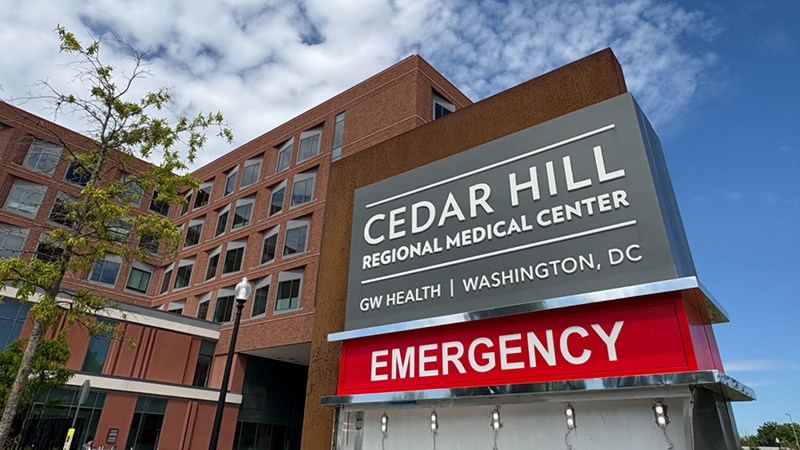
Institutional Shifts: The landscape east of the Anacostia River transitioned with United Medical Center closing in April 2025 as Cedar Hill Regional Medical Center GW Health opened.
Capacity Pressures: The reduction of postpartum capacity at MedStar Washington Hospital Center underscores systemic strains on maternal services across the District.
Four years ago, I questioned whether health care was losing its commitment to patient-centered service. Today, that question carries greater urgency. Difficulty reaching a medical office, obtaining an appointment, or receiving clear explanations can leave patients feeling abandoned.
When those frustrations intersect with hospital closures, reduced services, and persistent racial disparities, the concern extends beyond customer service. It becomes a question of whether people can obtain safe, dependable care when they need it most.
Defining the Gap Between Medical Capability and Practical Access
Decline does not mean that every hospital or clinician provides poor care. Nor does it mean that medicine has stopped advancing. The problem is the distance between medical capability and practical access.
A sophisticated treatment offers little reassurance to someone who cannot reach a provider or navigate the system. We should judge progress by whether patients receive timely attention, understand their options, and experience continuity throughout treatment.
Courtesy matters, but dependable access and clinical safety must also define the patient experience. For Black women, that gap has been a concern throughout the last decade and longer.
The Data Behind Persistent Racial Disparities in Maternal Care
A CDC analysis of pregnancy-related deaths during 2011 to 2015 found that Black women faced approximately three times the risk experienced by White women (Petersen et al., 2019). These warnings were established well before the pandemic. They demanded sustained attention to how health systems recognize complications, organize care, and respond to patients’ concerns.
In my April 2022 article, Black Maternal Health and Black Infant Mortality 2022 and Beyond, I addressed concerns that remain urgent today. Public awareness must translate into dependable services throughout pregnancy, delivery, and recovery.
The disparity remains evident in more recent data. CDC figures for 2024 show a maternal mortality rate of 44.8 deaths per 100,000 live births among Black women, compared with 14.2 among White women (Hoyert, 2026).
These figures measure deaths during pregnancy or within 42 days afterward, while the earlier pregnancy-related measure extends through one year. Although the measures differ, both reveal a persistent racial divide. The national maternal mortality rate decreased slightly between 2023 and 2024, but that change was not statistically significant. These findings challenge any assumption that greater awareness has resolved the crisis.
Washington, D.C., as a Ground-Level Case Study
Washington, D.C., illustrates why sustained attention matters. The March of Dimes’ 2025 report card gave the District an F for preterm birth. Its 2024 preterm birth rate was 11.8%, placing it 45th among the 50 states, D.C., and Puerto Rico. The rate had worsened from the previous year (March of Dimes, 2025).
This grade measures preterm birth rather than overall hospital quality. Nevertheless, it signals serious challenges for mothers and infants and strengthens the case for examining whether services match community needs.
Shifting Hospital Infrastructure and Maternal Capacity
Against that background, changes to hospital services deserve careful scrutiny.
Providence Hospital ended its remaining emergency hospital services in April 2019 (WUSA9, 2019). United Medical Center closed in April 2025, requiring another transition for residents accustomed to receiving care there. Importantly, its closure coincided with the opening of Cedar Hill Regional Medical Center GW Health on April 15, 2025 (AmeriHealth Caritas District of Columbia, 2025; D.C. Department of General Services, 2025).
The new hospital represented a substantial investment in comprehensive services east of the Anacostia River. Washington’s experience therefore includes rebuilding capacity as well as losing longstanding institutions. The essential question is whether the resulting network provides accessible, coordinated care.
A more recent development renewed concern about maternal services. In her October 9, 2026, column, journalist Jonetta Rose Barras examined the closure of one of MedStar Washington Hospital Center’s two postpartum units. She reported warnings from an anonymous medical professional about inadequate capacity and the possibility of women delivering in emergency rooms (Barras, 2026).
Those statements described feared consequences rather than documented deaths caused by the closure. The hospital itself remains open, and its representatives have maintained that remaining postpartum capacity can meet patient needs (Staton, 2026). That position and clinicians’ concerns should be evaluated through transparent monitoring of staffing, delays, transfers, and outcomes.
Safeguarding the Future of Health Care Delivery
What does this mean for health care overall? It means that financial stability, patient experience, and clinical safety must be evaluated together. Decisions that appear efficient within one institution may create longer journeys, disrupted relationships, or additional pressure elsewhere. Leaders should examine these consequences before reducing essential services.
Hospitals and public officials should explain changes, publish meaningful performance measures, and involve affected communities. Black mothers should help shape maternal services, including postpartum follow-up, transportation support, and coordination among providers. Patients deserve to know where to go, whom to call, and whether someone will listen when something feels wrong.
Scientific progress fulfills its purpose only when people can benefit from it. Listening to patients, preserving essential services, and measuring equitable outcomes must guide the future of health care.
Narratives matter. Patients matter.
References
- AmeriHealth Caritas District of Columbia. (2025, April 1). United Medical Center closing and Cedar Hill Regional Medical Center GW Health opening [Provider notice]. https://www.amerihealthcaritasdc.com/content/dam/amerihealth-caritas/acdc/pdf/provider/forms/2025/040125-united-medical-closing-cedar-hill-opening.pdf.coredownload.inline.pdf
- Barras, J. R. (2026, October 9). jonetta rose barras: Are aspects of DC’s much-touted healthcare system on the verge of collapse? The DC Line. https://thedcline.org/2026/10/09/jonetta-rose-barras-are-aspects-of-dcs-much-touted-healthcare-system-on-the-verge-of-collapse/
- District of Columbia Department of General Services. (2025, April 9). Mayor Bowser to deliver on promise to open new, full-service hospital East of the River with the opening of Cedar Hill Regional Medical Center GW Health [Press release]. https://dgs.dc.gov/release/mayor-bowser-deliver-promise-open-new-full-service-hospital-east-river-opening-cedar-hill
- Hoyert, D. L. (2026). Maternal mortality rates in the United States, 2024 (NCHS Health E-Stat No. 113). National Center for Health Statistics. https://doi.org/10.15620/cdc/174651
- Jones, L. (2022, April 30). Black maternal health and Black infant mortality 2022 and beyond. Biotechnology Health Management and Care LLC. https://biotechhmc.com/blog/?post_id=22&title=black-maternal-health-and-black-infant-mortality-2022-and-beyond
- March of Dimes. (2025). 2025 March of Dimes report card for District of Columbia. https://www.marchofdimes.org/peristats/reports/district-of-columbia/report-card
- Petersen, E. E., Davis, N. L., Goodman, D., Cox, S., Mayes, N., Johnston, E., Syverson, C., Seed, K., Shapiro-Mendoza, C. K., Callaghan, W. M., & Barfield, W. (2019). Vital signs: Pregnancy-related deaths, United States, 2011 to 2015, and strategies for prevention, 13 states, 2013 to 2017. Morbidity and Mortality Weekly Report, 68(18), 423 to 429. https://doi.org/10.15585/mmwr.mm6818e1
- Staton, K. (2026, July 17). Hospital that delivers a third of D.C. babies to close a postpartum unit. The Washington Post. https://www.washingtonpost.com/dc-md-va/2026/07/17/dcs-largest-hospital-close-postpartum-unit-sparking-some-concern/
- WUSA9. (2019, April 30). Providence Hospital closes after 158 years: “I think it will put a lot of people in jeopardy.” https://www.wusa9.com/article/news/i-think-it-will-put-a-lot-of-people-in-jeopardy-providence-hospital-closes-after-158-years/65-9c9a17e2-92b5-4a35-bb23-bde122906ab7
#BlackMaternalHealth #HealthEquity #DCMoms