
Despite enduring decades of systemic discrimination, federal loan rejections, and delayed debt relief, Black farmers continue to shape American agriculture through resilience and large-scale operations. While landmark legal battles like Pigford v. Glickman exposed widespread USDA lending disparities, modern growers—such as Arkansas’s Abraham Carpenter, Louisiana’s Charles Guidry, and Virginia’s Phil Haynie—are maintaining legacy farms spanning thousands of acres, anchoring Black agricultural ownership for future generations.

Articulated Insight – “News, Race and Culture in the Information Age”

Arkansas Soul
Systematic Discrimination Facing Present-Day Black Farmers
For nearly three decades, systemic barriers and administrative delays have hindered Black farmers across the United States from accessing vital federal relief.
Unfulfilled Federal Relief: Georgia farmer Lucious Abrams, who owns over 600 acres of farmland historically dedicated to row crops like soybeans, corn, and cotton, has received USDA letters promising debt elimination for decades. Despite these assurances, red tape has rendered his equipment unusable and brought active farming on his land to a standstill during critical planting seasons.
- The Legacy of Pigford v. Glickman: As one of six core plaintiffs in the landmark class-action lawsuit against the USDA, Abrams helped expose systemic racial discrimination in federal loan distribution and complaint handling between 1983 and 1997.
- Settlement Disparities: Though the lawsuit resulted in a $1.2 billion settlement in 1999, complex paperwork and strict deadlines led to thousands of legitimate Black farmer claims being rejected.
- Ongoing Lending Disparities: Federal assistance gaps persist. USDA data analysis shows that in 2022, only about one-third of Black farmers who applied for direct federal loans were approved, compared to significantly higher approval rates for white applicants.
Notable Present-Day Black Farmers Reshaping the Industry
Despite severe historical and financial obstacles, prominent Black agricultural producers continue to manage massive operations and preserve heritage crops across the American South.
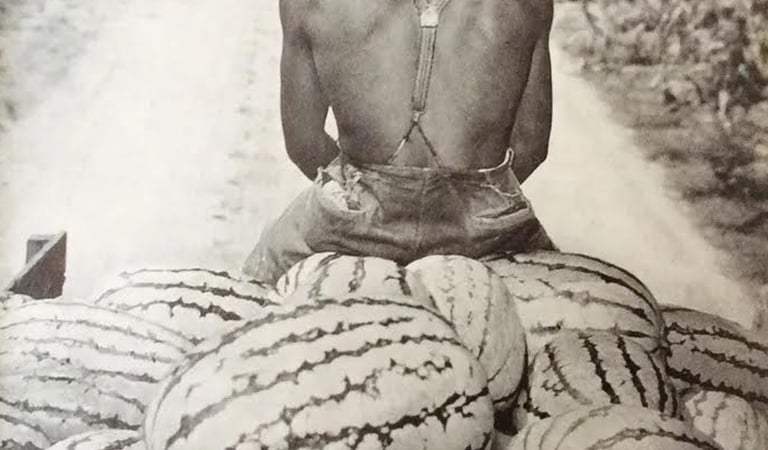
- Abraham Carpenter operates out of Arkansas as one of the most prominent produce farmers in the nation. Managing over 1,500 acres of produce, Carpenter is recognized as the largest Black watermelon producer in the United States, dedicating 300 acres exclusively to watermelon cultivation.
- Charles Guidry stands as a highly successful commercial sugarcane producer in Louisiana. With an expanse of over 4,000 acres, Guidry’s massive farming footprint serves as a model of scale and economic impact within the regional sugarcane industry.
- Phil Haynie, a fifth-generation Black farmer and Virginia Tech Agricultural Economics alumnus, oversees multi-state operations spanning thousands of acres. Managing two farms in Arkansas alongside major row-crop operations in Virginia, Haynie combines traditional agricultural legacy with modern economic strategy.
Preserving Agricultural Legacies and Modern Innovation
The perseverance of Black agricultural leaders highlights both the historical significance of land ownership and the importance of modern agricultural education. Today’s Black farmers leverage degrees in Agricultural Economics and robust peer networks to navigate complex market pressures, ensure regional food supply chain stability, and continuously advocate for equitable systemic reform within federal agricultural programs.
The Narrative Matters!
References
Jones, L. (July 13, 2023). Watermelon: The $500 Billion Dollar Wonder Fruit Loved Around the World. Watermelon: The $500 Billion Dollar Wonder Fruit Loved Around the World – The Narrative Matters
#BlackFarmers #AgHistory #FoodJustice