---
"title": "5 Lessons from Lung Cancer Survivors Who Refused to Be Ignored"
"description": "Join the 2025 SCHEQ Lung Cancer Interventions Summit in Chicago, where patients, clinicians, and researchers unite to eliminate barriers, enhance outcomes, and promote equity in lung cancer care."
"date": "2025-11-04"
"authors":
-
"name": "Blackdoctors.org"
"url": "https://thenarrativematters.com/5-lessons-from-lung-cancer-survivors-who-refused-to-be-ignored/"
"categories":
- "Health"
"tags":
- "Cancer Health Equity"
- "Cancer Research"
- "Chicago Events"
- "Healthcare Innovation"
- "Lung Cancer"
- "Oncology Summit"
- "Patient Advocacy"
- "SCHEQ Summit"
- "STEMM"
- "Survivorship"
---
# 5 Lessons from Lung Cancer Survivors Who Refused to Be Ignored
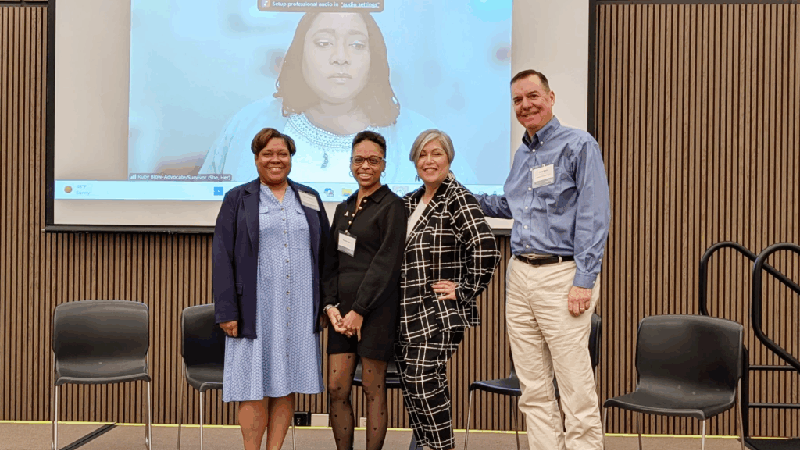
_Lung cancer survivors share lessons on advocacy and equity at the SCHEQ Summit, moderated by Angela James of LUNGevity Foundation._
The 2025 [STEMM & Cancer Health Equity (SCHEQ)](https://scheq.org/) Lung Cancer Interventions Summit in Chicago was focused on one main goal: removing barriers and improving outcomes for everyone affected by lung cancer. By bringing patients, clinicians, and researchers together, the event aimed to break down communication silos and build a stronger community dedicated to advocacy and survivorship.
The session, *Patient Perspectives on Lung Cancer and Lessons Learned*, provided the heart of the summit. Moderated by Angela James of the [LUNGevity Foundation](https://www.lungevity.org/), four survivors—Juanita Segura, Ruby Blow, Natalie Brown, and Dave Bjork—shared their battles, revealing critical areas where the system needs to improve.
## Key Takeaways from the Panel
### **1. Demand Comprehensive Biomarker (Genetic) Testing**
Biomarker testing—sometimes called molecular or genomic testing—isn’t optional. It’s the foundation of **precision medicine**. This testing examines the DNA of cancer cells to find mutations that determine how the tumor grows and which drugs will work best.
- **Juanita Segura**, diagnosed in 2014 with Stage 3B NSCLC and **EGFR-positive**, was given 18 months to live. She has survived **11 years** thanks to the targeted therapy enabled by her testing. Her motivation for advocacy is deeply personal: she fights for breakthroughs so she can have **more time for her grandchildren** (her “Abuela” title) and her family.
- **Ruby Blow**, diagnosed in 2018 with Stage IV **ALK-positive** NSCLC, started a clinical trial. She learned critical information about a dangerous “washout period” between drugs only from **fellow patients**, proving the power of community-shared knowledge in navigating complex treatments.
**Tip: Ask for comprehensive biomarker testing immediately after diagnosis. It’s your roadmap to the right treatment.**
### **2. Be Your Own Advocate—Loudly**
Every panelist faced delays, dismissals, or a lack of critical support before and after receiving an accurate diagnosis.
- **Juanita** was repeatedly told she had **asthma** for months, despite persistent symptoms. It took an **emergency room visit** to finally uncover her cancer.
- **Dave Bjork** was misdiagnosed with **pneumonia** multiple times over nine months before a radiologist finally noticed a recurring shadow—his tumor.
- **Ruby Blow** experienced a significant **barrier to care** when a doctor attempted to dismiss her collapse of one lung, requiring her **therapist friend to intervene** and successfully advocate for her admission.
**Tip:** **If your symptoms are ignored, push back. Seek a second opinion, ideally from a lung cancer specialist. Your life depends on being heard.**
### **3. The Patient Community Is a Lifeline**
Panelists emphasized that some of their most critical, practical, and life-saving information came from other patients—not doctors.
- **Juanita** found practical help from patient groups for managing severe drug side effects, including **psychosis and diabetes** caused by TKI therapy.
- **Natalie Brown** turned to advocacy networks after enduring chemotherapy, immunotherapy, and **three failed clinical trials** before pursuing a life-saving double lung transplant.
- **Dave** uses his [*Research Evangelist Podcast*](https://researchevangelist.com/) to connect patients and scientists, demonstrating the power of survivors to drive medical progress.
**Advocacy and support groups** also play an essential role in sharing knowledge, emotional strength, and resources:
- [**LUNGevity Foundation**](https://www.lungevity.org/) – Funds research, offers education, and connects patients nationwide.
- [**GO2 for Lung Cancer**](https://go2.org/) – Provides advocacy, education, and patient support.
- [**American Lung Association** ](https://www.lung.org/)– Fights stigma and pushes for federal research funding.
- **Mutation-specific groups** – [*EGFR Resisters*](https://egfrcancer.org/) and [*ALK Positive*](https://alkpositive.org/) provide focused, patient-led guidance and research support.
**Tip:** **Join a community. These groups turn isolation into empowerment and can literally change treatment outcomes.**
### **4. Supportive Care is Not Optional**
Supportive care focuses on managing pain, side effects, and mental health. The panelists stressed that the overall cost of cancer care goes far beyond the medical bill, creating **financial toxicity**.
- **Dave Bjork** endured months of **excruciating pain** because no one referred him to a pain clinic, highlighting a failure in supportive care.
- **Natalie Brown**’s journey, which involved a high-risk **bilateral lung transplant**, required her to **relocate to Chicago** for treatment. This meant not just a massive medical bill, but crippling non-medical expenses like **temporary housing, travel, and lost wages** for herself and her caregiver—a profound financial burden that can prevent access to life-saving care.
**Tip: Ask for referrals to pain management, counseling, and social work as early as possible. Address the financial burden with your social worker immediately.**
**RELATED: [Living with Lung Cancer: How to Find Your Community?](https://blackdoctor.org/lung-cancer-how-to-find-your-community/)**
### **5. Fight the Stigma—Anyone Can Get Lung Cancer**
Every survivor confronted the same painful question: “Did you smoke?” The stigma distorts public perception, damages emotional health, and affects research funding.
- **Dave** summed it up best: “Anybody can get lung cancer. It’s a disease of the lung, and if you have lungs—you’re at risk.”
- **Ruby**, diagnosed young and without traditional risk factors, and **Natalie** are powerful examples of the fact that this disease is not limited by age or lifestyle.
**Tip: Challenge the stereotype. Stigma costs lives by discouraging screening, funding, and empathy.**
\
\#LungCancer \#CancerHealthEquity \#SCHEQ2025 \#OncologyInnovation \#PatientAdvocacy \#Survivorship \#HealthcareEquity \#ChicagoEvents \#CancerResearch \#STEMM